
Guide 06 · How We Test
How We Test
Every batch on this site points to a lab report. This guide explains what those reports are, how to read one yourself, and what happens when a batch does not pass.
Start here
What a certificate of analysis actually is
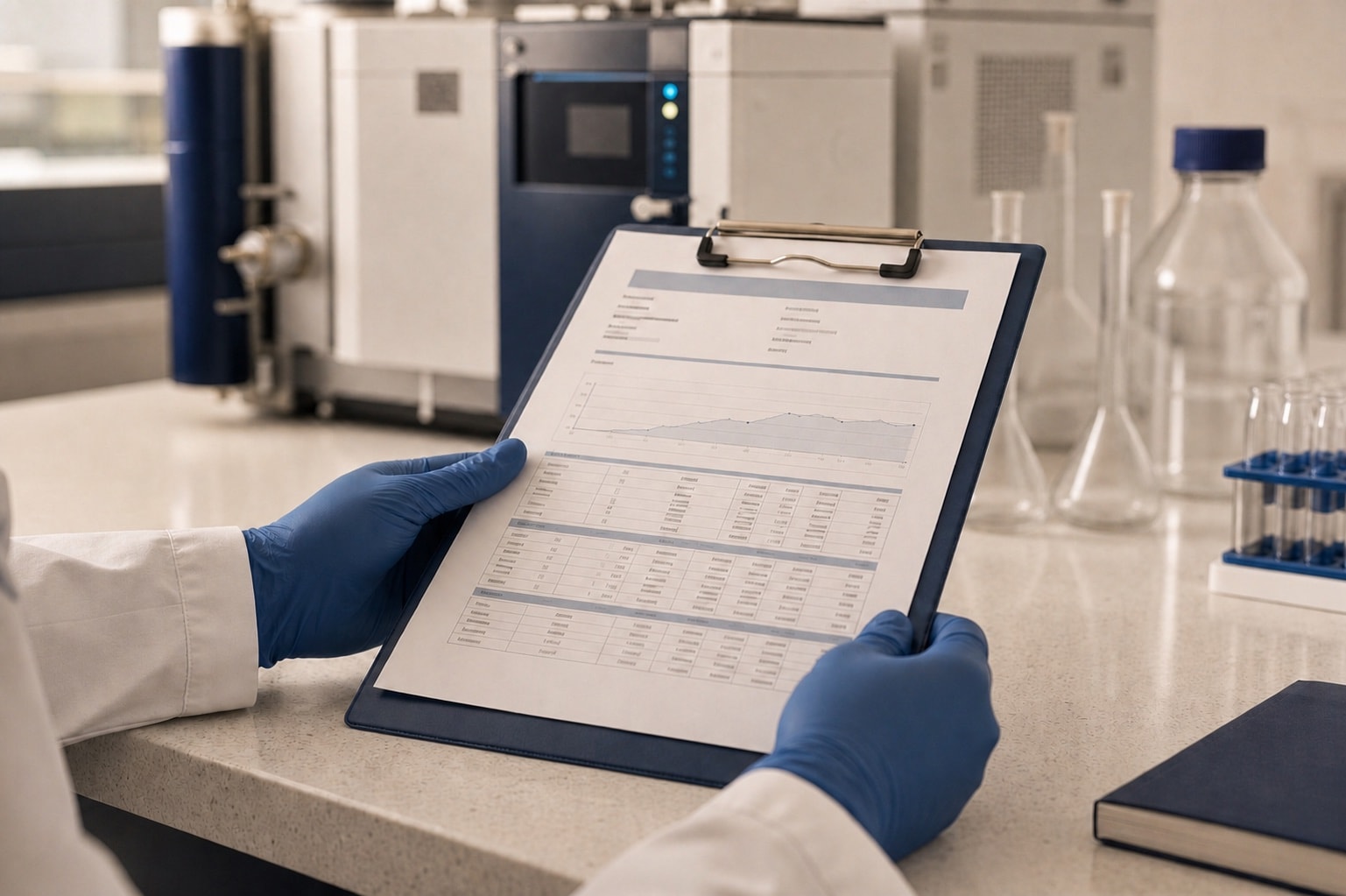
A certificate of analysis, usually shortened to COA, is a report from an independent third-party laboratory. The seller sends a sample from a batch, the lab runs its own analysis, and the lab writes down what it found. The seller does not get to edit the result.
The key word is batch. A COA never speaks for a product line in general; it identifies one specific production run by its batch number and describes what was measured in that run and nothing else. That specificity is the whole point. A claim about "our products" is marketing. A claim about batch such-and-such, signed by a lab, is a document.
One thing a COA is not: a promise about what a medication will do for you. It answers a narrower and more checkable question. Is the substance in the vial the substance on the label, in the amount the label states?
Field by field
How to read one
COAs look technical, but there are only five things you need to find. Every report on our lab results page contains all five.
Batch ID
The identifier that ties the report to one specific production run. It matches what is printed on your order, so you can pair the pen in your hand with the exact document that describes it.
Purity
The percentage of the tested sample that is the stated compound, as measured by the lab. The number on the report is the lab's own finding; it is never written by the seller.
Mass verification
Confirms the quantity: the pen contains the amount of compound the label states. Purity tells you what the substance is; mass tells you how much of it is actually there.
Test date
When the analysis was performed. A report is a snapshot of one batch at one moment, and the date lets you see how recent that snapshot is.
Signature block
The lab's own stamp, analyst signature, and report number. This is what makes the document verifiable: anyone can take those details to the lab and confirm the report is genuine.
At Deer
Every batch, one independent lab
Here is the process, start to finish. Every batch we stock goes to Janoshik Analytical, an independent laboratory, for testing. We do not test in house, because a number a seller produces about its own product is not worth much; the distance between us and the lab is what gives the result its weight.
As testing completes, the reports are published on the lab results page, batch by batch, exactly as the lab issued them. You can match the batch ID on your order to its report there at any time.
And the rule that makes all of it mean something: a batch that fails does not ship. Not discounted, not quietly sold anyway. It does not enter inventory.
The honest part
Why this matters here
Peptides like these sit in an unregulated corner of the market. No agency reviews a seller's claims before they go up, and anyone can print anything on a label. In that environment, published third-party numbers are the only claims worth trusting: a specific batch, a named lab, a document you can verify yourself.
It is also why we hold our own words to the same standard. This site never promises outcomes beyond the averages reported in cited clinical trials, because a promise we cannot point to a source for is exactly the kind of claim this page is teaching you to ignore. Everything here is general research context, not medical advice; for decisions about your own health, talk to a licensed healthcare professional.
Next up: All Guides, from GLP 101 to titration and paying by e-Transfer.